If you’ve ever taken a phone call in a remote mountain cabin, pulled power to a construction site that’s 10 miles from the nearest grid, or relied on medical equipment that fits inside a tiny wearable patch, you’ve used a specialty cable. Most people never think about these cables—they’re not the thick, generic power cords that plug into every wall outlet, or the thin Ethernet cables that power home Wi-Fi. But they’re the unsung backbone of industries that can’t tolerate downtime: aerospace, medical, defense, renewable energy, and industrial automation. As a specialty cable supplier, I get asked all the time: “What makes these cables different from regular ones, and how do you actually make them?” Let me walk you through the process, straight from our floor to your project. Specialty Cables

First, let’s get one thing straight: specialty cables aren’t a one-size-fits-all product. A cable designed for a wind turbine’s blade, which has to withstand 100-mph winds and subzero temperatures, can’t look or work like the tiny cable that powers a glucose monitor. That’s why our process starts way before we touch raw materials—we spend days (sometimes weeks) listening to our clients. A client building electric vehicle charging stations needs a cable that can carry high current without overheating; a defense contractor needs a cable that’s flame-retardant and impervious to saltwater. We ask questions about environment, performance requirements, durability, even weight. Once we lock in the specs, that’s when the manufacturing work begins.
The first step is picking the right raw materials—and this is where specialty cables get their unique edge. Regular cables use standard copper or aluminum for conductors, insulation made of basic PVC. We don’t do standard here. For conductors, we might use high-purity oxygen-free copper (OFC) for low signal loss, or tinned copper for resistance to corrosion. For extreme environments, some of our clients require nickel-plated copper, or even silver plating for aerospace applications where signal clarity is non-negotiable. Insulation is where things get fancy: we use cross-linked polyethylene (XLPE) for high heat resistance, Teflon for extreme cold and chemical exposure, rubber compounds for flexibility in heavy machinery, and even specialized thermoplastics that can handle open flames without releasing toxic fumes. We also have custom materials for clients working in oil and gas, where cables have to resist oil, grease, and harsh chemicals. No shortcuts here—we test every raw material before it even enters the production line, because a bad batch of insulation can ruin a whole cable.
Next up is conductor stranding. Wait, why don’t we just use a single solid wire for conductors? Because solid wires are stiff, break easily when bent repeatedly, and can’t handle the kind of movement most specialty cables see. Stranding is twisting multiple thin wires together to make a single conductor. It sounds simple, but there’s a science to it. We use different stranding patterns: concentric stranding for basic flexibility, bunch stranding for even more bendability that’s perfect for wearable medical devices, and compact stranding to reduce the overall size of the cable without losing conductivity. The number of wires, their thickness, and the tension we use when twisting all matter—too loose, and the wires will fray over time; too tight, and you risk damaging the metal, which hurts performance. Our stranding machines run 24/7 sometimes, but even with automation, our team checks every strand batch by hand to make sure there are no weak spots.
Once we have our stranded conductors, we move to extrusion: wrapping each conductor (or group of conductors) in insulation. Extrusion is the core step for making the cable’s protective layer. We heat the raw insulation material to a precise temperature, then push it through a die that’s custom-sized to fit our conductor. The die isn’t generic—we machine it specifically for each cable design, because even a 0.1mm difference in thickness can throw off performance. For high-voltage specialty cables (like those for EV chargers or wind turbines), we apply a dual-layer insulation: a inner layer that’s pure dielectric to prevent electrical leakage, and an outer layer for physical protection. After extrusion, we immediately cool the cable in a water bath to set the insulation—cooling too fast makes it brittle, too slow wastes time, so we calibrate that exactly per material specs. We also run a thickness check right after extrusion with ultrasonic sensors, so we catch any defects (like thin spots or bubbles) before the cable moves on. No defects here mean no field failures later, which is non-negotiable for our clients.
If a cable has multiple conductors, the next step is cabling and core assembly. That means taking all the insulated conductors (and sometimes a ground wire, which is a separate conductor for safety) and twisting them together into a core. Again, it’s not just twisting—we use a lay length: the distance the twist makes around the core. A too-short lay length makes the cable stiff; too long, and the conductors can shift inside the insulation, which causes electrical inconsistencies. For some applications, we add a filler material between the conductors to keep the core round and prevent tangling. Fillers are usually non-hygroscopic (meaning they don’t absorb moisture) because moisture can corrode conductors over time, especially in underwater or humid environments. For flexible cables, we might add a bedding layer, a soft material between the core and the outer jacket, to reduce wear from repeated bending.
Then comes shielding—a step most people never see, but it’s make-or-break for specialty cables that carry sensitive signals. If you’ve ever had a radio that cuts out near power lines, you know electromagnetic interference (EMI) is a real problem. Shielding blocks that interference. We use different types of shielding depending on the client’s needs: foil shielding (thin aluminum or copper tape wrapped around the core) for high-frequency signals like those in medical imaging or aerospace; braided shielding (thin metal wires woven together like a shirt) for both EMI protection and physical durability, perfect for industrial machinery that gets bumped and pulled; and even hybrid shielding that combines foil and braiding for extra protection. For cables used in harsh outdoor environments, we might add a drain wire to the shielding, which grounds the shield to prevent static buildup—something that’s critical for defense and oil and gas applications where static can cause explosions. Shielding isn’t one-and-done either; we test every shield for continuity, so we know there are no gaps that would let interference through.
Finally, the outer jacketing step. This is the outermost layer that protects the entire cable from the outside world—UV rays, abrasion, chemicals, water, even animal bites (yes, some rural clients need that). Jacketing uses many of the same materials as insulation, but we choose based on the environment: UV-stabilized thermoplastic for outdoor solar cables, oil-resistant rubber for construction site cables, low-smoke zero-halogen (LSZH) compounds for public transport cables where fire safety is key. The jacketing extrusion process is similar to the inner insulation step, but we use a thicker die for the outer layer. After jacketing, we mark the cable with everything our clients need: voltage rating, material specs, batch number, and our supplier’s brand mark. We also do a final visual inspection here, and run electrical tests to make sure the cable’s conductivity, insulation resistance, and shielding all meet the original specs.
Wait, I should mention testing—because none of those steps mean anything if the cable doesn’t perform. Our testing process is rigorous, way beyond what’s required for regular cables. For flexibility, we do a bend test: we loop the cable thousands of times around a mandrel to make sure it doesn’t break or lose conductivity. For extreme temperatures, we put cables in environmental chambers that go from -60°F to 200°F, checking for brittleness or shrinkage. For EMI, we test in an anechoic chamber to measure how much interference the cable lets in or out. For chemical resistance, we submerge cables in oil, saltwater, or cleaning chemicals for weeks to make sure the jacket doesn’t degrade. Every batch of specialty cables we make goes through a sample test before we ship any to a client, and we keep test records for every order—our clients love that transparency, especially for regulated industries like medical and defense.
Now, you might be wondering: how is this different from mass-produced regular cables? It’s all about customization and precision. Mass-produced cables are made to hit a low cost per unit, so they use generic materials and standardized processes. Specialty cables are made to solve a specific problem, so every step is tailored to the client’s unique needs. We don’t have a 100-foot roll of “universal” specialty cables sitting around—most of our orders are custom, whether that’s a 50-foot cable for a custom robotic arm or a 10,000-foot reel for a wind farm. That means our team works closely with clients every step of the way, adjusting the process to make sure the final cable does exactly what they need.
At the end of the day, manufacturing specialty cables is equal parts science and care. It’s not just about twisting wires and extruding plastic—it’s about making a product that works when every second counts. A medical cable in an operating room can’t fail. A defense cable in a remote theater can’t fray. A renewable energy cable in a wind farm can’t break during a storm. That’s why we take every step seriously, from picking raw materials to the final test.
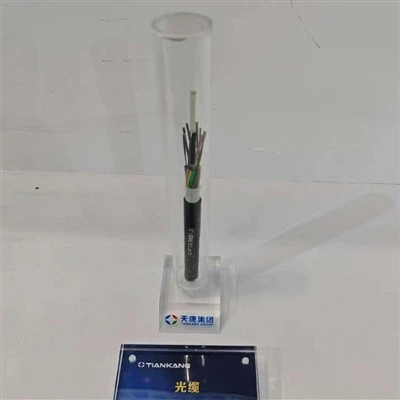
If you’re working on a project that needs a cable that fits your exact specs—whether it’s for aerospace, medical, industrial, or any other sector—we’re here to help. We don’t push one-size-fits-all solutions; we listen, we adjust, and we make a cable that works for you. Reach out to our team to talk through your requirements, get a custom quote, and make sure your project has the reliable cable it needs.
Power Cables References
- Specialty Cable Manufacturing: Materials, Processes, and Applications. International Cable Manufacturing Association, 2022.
- Electromagnetic Interference Shielding for Cables in Industrial and Aerospace Systems. Journal of Cable Science and Technology, 2021.
- Environmental Testing Standards for Specialty Cables. Underwriters Laboratories, 2020.
- Conductor Stranding and Extrusion Techniques for High-Performance Cables. Wire Journal International, 2022.
Anhui Tiankang Group Co., Ltd.
As one of the most professional specialty cables manufacturers and suppliers in China, we’re featured by quality products and good service. Please feel free to wholesale bulk customized specialty cables made in China here from our factory. Welcome to contact us for pricelist.
Address: No. 20, South Renhe Road, Tianchang City, Anhui Province, People’s Republic of China
E-mail: tiankanggroup006@163.com
WebSite: https://www.tkanggroup.com/
