As a seasoned provider of automatic production lines for magnetic latching relays, I’ve witnessed firsthand the transformative power of well – designed production line layouts. These layouts are the backbone of efficient and high – quality relay manufacturing, and their selection can significantly impact a company’s bottom line. In this blog, I’ll explore the various production line layout options available for the automatic production of magnetic latching relays, sharing insights based on years of industry experience. Automatic Production Line for Magnetic Latching Relays
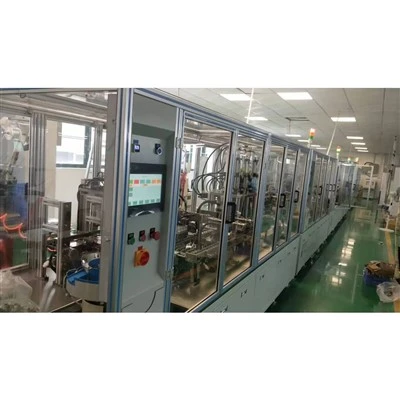
U – shaped Layout
The U – shaped layout is a popular choice in the manufacturing of magnetic latching relays. This layout arranges the production equipment in a U – shaped configuration, with the entrance and exit points close to each other. One of the key advantages of the U – shaped layout is its flexibility. Workers can easily move between different workstations, which is particularly useful when dealing with complex assembly processes. For magnetic latching relays, which often require multiple steps of component insertion, soldering, and testing, the U – shaped layout allows for a seamless flow of work.
In addition, the U – shaped layout promotes communication among workers. Since the workstations are in close proximity, operators can quickly share information and troubleshoot problems. This is crucial in maintaining the quality of the relays, as any issues can be addressed immediately. For example, if a soldering defect is detected at one workstation, the operator can quickly consult with the adjacent worker to determine the root cause and take corrective action.
Another benefit of the U – shaped layout is its space – efficiency. It minimizes the distance between workstations, reducing the amount of floor space required. This is especially important for companies with limited manufacturing space. By optimizing the use of space, companies can potentially save on rent and other overhead costs.
However, the U – shaped layout also has some limitations. It may require a higher level of worker training, as operators need to be familiar with multiple tasks due to the close – knit nature of the layout. Additionally, if one workstation experiences a breakdown, it can have a more significant impact on the entire production line compared to some other layouts, as the flow of work is more interdependent.
Straight – line Layout
The straight – line layout is a classic option for automatic production lines. In this layout, the production equipment is arranged in a linear fashion, with the raw materials entering at one end and the finished products exiting at the other. This layout is ideal for high – volume production of magnetic latching relays.
One of the main advantages of the straight – line layout is its simplicity. The flow of work is straightforward, making it easy to manage and control. Workers can focus on a single task at each workstation, which can lead to increased productivity and efficiency. For example, in the production of magnetic latching relays, one workstation can be dedicated to component insertion, another to soldering, and yet another to testing. This specialization allows workers to become highly proficient in their respective tasks.
The straight – line layout also facilitates easy integration with automated conveyor systems. Conveyor belts can be used to move the relays smoothly from one workstation to the next, reducing the need for manual handling and minimizing the risk of damage. This is particularly important for magnetic latching relays, which are often delicate components.
However, the straight – line layout lacks the flexibility of the U – shaped layout. If there are changes in the production process or product design, it can be more difficult and costly to reconfigure the line. Additionally, since the workstations are arranged in a linear sequence, any bottleneck at one workstation can cause a slowdown in the entire production line.
Cellular Layout
The cellular layout divides the production line into self – contained cells, each responsible for a specific set of tasks in the manufacturing of magnetic latching relays. Each cell is equipped with all the necessary equipment and resources to complete its assigned tasks independently.
One of the major advantages of the cellular layout is its ability to improve quality control. Since each cell is responsible for a specific part of the production process, operators can focus on ensuring the quality of their work. For example, a cell dedicated to the assembly of the magnetic components of the latching relay can closely monitor the alignment and connection of these parts, reducing the chances of defects.
The cellular layout also enhances worker motivation and job satisfaction. Workers in each cell have a greater sense of ownership over their work, as they are responsible for a complete sub – process. This can lead to increased productivity and a more positive work environment.
Moreover, the cellular layout is highly flexible. If there is a change in production volume or product requirements, individual cells can be easily adjusted or reconfigured. This makes it suitable for companies that need to respond quickly to market changes.
However, implementing a cellular layout requires careful planning and coordination. The cells need to be designed in such a way that they can communicate effectively with each other to ensure a smooth flow of work. Additionally, there may be some duplication of equipment between cells, which can increase the initial investment cost.
Circular Layout
The circular layout arranges the production equipment in a circular or oval shape. This layout is less common but can be very effective in certain situations for the production of magnetic latching relays.
One of the unique advantages of the circular layout is its continuous flow of work. The circular arrangement allows for a seamless transition between workstations, reducing the need for sharp turns or complex routing of the relays during production. This can lead to a more efficient use of time and resources.
The circular layout also promotes teamwork and collaboration. Since the workers are in a circular arrangement, they are in close proximity to each other, which encourages communication and interaction. This can be beneficial in solving problems and improving the overall production process.
However, the circular layout may require a larger amount of floor space compared to some other layouts. It also has specific requirements for the placement and orientation of the equipment, which can be more challenging to design and implement.
Choosing the Right Layout
When choosing the production line layout for the automatic production of magnetic latching relays, several factors need to be considered. Firstly, the production volume is a critical factor. High – volume production may be better suited to a straight – line layout, while low – volume or custom – production may benefit from a more flexible layout such as the U – shaped or cellular layout.
Secondly, the complexity of the manufacturing process is important. If the production of magnetic latching relays involves multiple complex steps and requires frequent interaction between workers, a layout that promotes communication and flexibility, such as the U – shaped or circular layout, may be more appropriate.
The available space in the manufacturing facility also plays a significant role. Companies with limited space may prefer a space – efficient layout like the U – shaped or cellular layout, while those with ample space may have more options.
In addition, the cost of implementation and future expandability should be taken into account. Some layouts may require a higher initial investment but offer better long – term flexibility and ease of expansion.
As a supplier of automatic production lines for magnetic latching relays, I understand the importance of selecting the right layout for your specific needs. Our team of experts can work with you to analyze your production requirements, production volume, and available space. We can then recommend the most suitable layout option and provide a customized solution tailored to your business.
Automotive Relay Production Line If you’re in the market for an automatic production line for magnetic latching relays and want to discuss the best layout options for your manufacturing process, I encourage you to reach out. We’re here to help you optimize your production line, improve efficiency, and enhance the quality of your magnetic latching relays. Contact us to start a conversation about your production needs and explore how we can support your business growth.
References
- Groover, M. P. (2015). Automation, Production Systems, and Computer – Integrated Manufacturing. Pearson.
- Kochhar, S. K. (2009). Manufacturing Technology: Forming, Joining and Machining. Wiley.
- Schonberger, R. J. (1986). World – Class Manufacturing: The Lessons of Simplicity Applied. Free Press.
Yangning (Xiamen) Intelligent Technology Co., Ltd.
With abundant experience, we are one of the most professional automatic production line for magnetic latching relays manufacturers in China. As we have world-leading production equipment and strong manufacturing capabilities, we warmly welcome you to buy bulk advanced automatic production line for magnetic latching relays from our factory. Customized orders are welcome.
Address: Room 307-2, No. 15 Duiying Road, Software Park Phase III, Torch Hi-Tech Zone, Xiamen, Fujian, China
E-mail: mia@ynautos.com
WebSite: https://www.ynautos.com/
