Hey there, fellow lathe enthusiasts! As a supplier in the lathe industry, I’ve been getting a lot of questions lately about the differences between live centers and dead centers on a lathe. So, I thought I’d take a moment to break it down for you in a way that’s easy to understand. Lathe
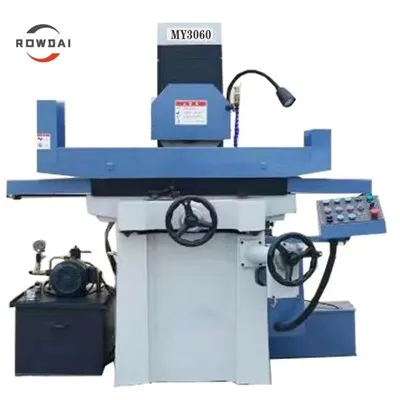
Let’s start with the basics. A lathe is a machine tool that rotates a workpiece about an axis of rotation to perform various operations such as cutting, sanding, knurling, drilling, or deformation. And both live centers and dead centers are essential components in a lathe setup, but they serve different functions.
What’s a Dead Center?
A dead center is a simple, stationary tool. It’s usually made of high – quality steel and has a sharp point. The dead center is mounted in the tailstock of the lathe. When you’re using a dead center, the workpiece rotates around it.
One of the main advantages of a dead center is its simplicity. It’s a straightforward piece of equipment that doesn’t have any moving parts (other than the workpiece rotating around it). This simplicity makes it very reliable and relatively inexpensive.
Dead centers are great for applications where you need high precision. Since there are no moving parts within the center itself, there’s less chance of any play or movement that could affect the accuracy of your work. For example, if you’re turning a precision shaft or a small, delicate part, a dead center can help you achieve very tight tolerances.
However, dead centers also have their drawbacks. Because the workpiece is rotating directly against the stationary center, there’s a lot of friction. This friction generates heat, which can cause several problems. First, the heat can wear down the tip of the dead center over time, reducing its lifespan and potentially affecting the quality of your work. Second, the heat can also cause the workpiece to expand, leading to dimensional inaccuracies.
What’s a Live Center?
A live center, on the other hand, is a bit more complex. It has a bearing inside, which allows the center to rotate along with the workpiece. The live center is also mounted on the tailstock of the lathe.
The main advantage of a live center is the reduced friction. Since the center is rotating with the workpiece, there’s much less rubbing and heat generation. This means that wear and tear on both the center and the workpiece are significantly reduced. You can run your lathe at higher speeds without having to worry as much about heat – related issues.
Live centers are ideal for high – speed operations and jobs that involve large workpieces. For instance, if you’re turning a long, heavy shaft or a large diameter cylinder, a live center can handle the task much better than a dead center. The reduced friction also means that you’ll get a smoother finish on your workpiece, which is great for applications where surface quality is important.
But live centers aren’t perfect either. They’re more expensive than dead centers because of the internal bearing mechanism. Also, the bearing in a live center can wear out over time, and if not properly maintained, it can cause problems. For example, a worn – out bearing can introduce play or vibration into the system, which can affect the quality of your work.
Key Differences in Operation
When it comes to actually using these centers on a lathe, there are some key differences in how they operate.
With a dead center, you need to be more careful about speed. You can’t run the lathe at extremely high speeds because of the friction and heat buildup. You also need to use cutting fluids to help reduce the heat and lubricate the contact between the workpiece and the center. And since the dead center is stationary, it’s important to make sure that the workpiece is properly aligned to avoid uneven wear on the center tip.
On the other hand, a live center allows you to be more flexible with speed. You can increase the rotational speed of the lathe without worrying too much about the heat. However, you still need to maintain the live center regularly. Check the bearing for any signs of wear, and make sure to lubricate it as recommended by the manufacturer.
Applications
The choice between a live center and a dead center also depends on the type of work you’re doing.
If you’re working on small – scale, high – precision jobs like making watch parts, jewelry components, or small machine parts, a dead center is often the better choice. The precision and simplicity of the dead center can help you achieve the tight tolerances required for these types of applications.
For larger – scale projects, such as turning large diameter shafts for industrial machinery or long, heavy workpieces for construction equipment, a live center is usually the way to go. The reduced friction and ability to handle high – speed operations make it more suitable for these demanding jobs.
Maintenance
Maintenance is another area where these two centers differ.
A dead center doesn’t require much maintenance. You just need to keep the tip clean and sharp. If it starts to wear down, you can re – grind the tip to restore its shape. A simple cleaning with a brush and some oil every now and then is usually enough to keep it in good working condition.
A live center, however, needs more attention. You need to regularly check the bearing for any signs of wear, such as noise or play. If the bearing is worn out, it needs to be replaced. And you should also follow the manufacturer’s recommendations for lubrication, which usually involves using a specific type of grease.
Cost Considerations
Cost is always a factor when choosing between a live center and a dead center. As I mentioned earlier, dead centers are generally cheaper. They’re a great option if you’re on a tight budget or if you only need to do occasional, small – scale work.
Live centers, with their more complex design and internal bearing, are more expensive. But if you’re doing a lot of high – speed, large – scale work, the investment in a live center can pay off in the long run. You’ll save on replacement costs due to less wear and tear, and you’ll also get better – quality results.
In conclusion, both live centers and dead centers have their own pros and cons. The key is to understand your specific needs and choose the center that’s right for your project. If you’re still not sure which one to go for, or if you have any other questions about lathe accessories, don’t hesitate to reach out. We’re here to help you make the best choice for your lathe setup.
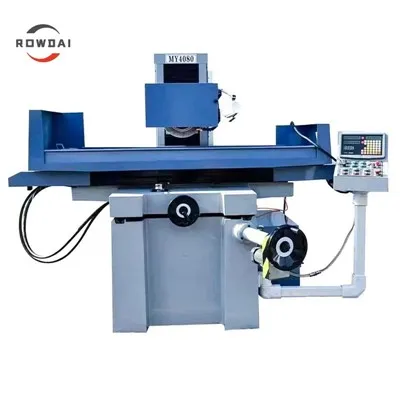
Surface Grinding Machine Whether you’re a hobbyist looking to take your woodworking or metalworking projects to the next level, or a professional in the manufacturing industry, having the right center on your lathe can make a huge difference in the quality of your work. So, why not give us a call and start discussing the best options for your needs? Let’s work together to get you the perfect lathe accessories for your projects.
References
- "Machinery’s Handbook" – An authoritative reference for all things related to machining and machine tools.
- "The Lathe Operator’s Handbook" – A practical guide that offers in – depth information on lathe operations and components.
Henan Rowdai Machinery Equipment Co., Ltd.
As one of the most professional lathe manufacturers in China, we’re featured by quality products and good price. Please rest assured to buy high-grade lathe for sale here from our factory. If you have any enquiry about cooperation, please feel free to email us.
Address: Building 9, E-Commerce Industrial Park, High-Tech Zone, Zhengzhou, Henan, China
E-mail: rowdai@rowdai.com
WebSite: https://www.rowdai.com/
