If you’ve spent any time around industrial piping systems, odds are you’ve come across a butterfly valve. They’re popular for a reason—they’re cheap, compact, and super easy to operate. But here’s a question we get all the time from folks who work with high-temp processes: “Can a butterfly valve actually handle that kind of heat?” As a supplier who’s been selling these things for over a decade, I’m here to break it down straight, no fancy jargon, no corporate fluff. Butterfly Valve
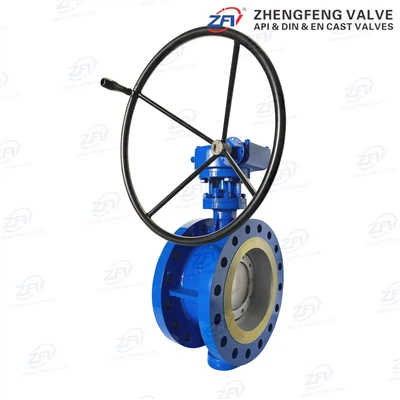
First, let’s get one thing clear: not all butterfly valves are made equal. A lot of people see a butterfly valve and think “one size fits all”… but that’s like thinking a beach towel works for a winter ski trip. The temperature limit all comes down to what materials the valve’s parts are made of, and how those materials hold up when things get hot.
Let’s start with the basic components of a butterfly valve: there’s the body, the disc, the stem, the seat, and the actuator (the part that turns the valve open and closed). The seat is the big one when we’re talking high temps. Most standard butterfly valves use rubber seats—EPDM, Buna-N, silicone, that sort of thing. Those are great for general use, but rubber seats usually start breaking down around 200°F to 300°F, tops. If you’re pushing steam at 350°F, that rubber’s going to harden, crack, and leak faster than a faulty pipe. So standard butterfly valves with rubber seats? Nope, they’re not for high-temp jobs.
But here’s the good news: there are butterfly valves built specifically for high-temperature apps. We sell a line of metal-seated butterfly valves that are designed to handle way more heat. Their seats are made of things like stainless steel, Inconel, or Monel—materials that don’t melt, warp, or lose their shape when temps climb into the 500°F, 700°F, even 800°F range. We’ve got customers in refineries, power plants, and chemical manufacturing that run these valves on their hot oil lines, steam headers, and furnace exhaust systems. And we’ve got test data to back that up—these valves have been operating reliably in 650°F environments for years with next to no maintenance.
Wait, but it’s not just the seat. The disc and body materials matter too. A lot of cheap butterfly valves use cast iron for the body, which starts to get brittle around 400°F. That’s a problem because if the body cracks, you’ve got a major leak. Our high-temp valves use ductile iron, carbon steel, or alloy steel bodies that are engineered to stay strong even when the heat’s cranked. The disc? We use hardened stainless steel or alloyed steel for those, so they don’t expand too much when hot (thermal expansion is a big one here—if the disc grows more than the seat, it might not seal right when you need it to).
Let me tell you a quick story to put this in perspective. A couple years back, we had a customer who runs a small food processing plant. They were using a regular butterfly valve on their pasteurization line, which runs at about 275°F. The rubber seat only lasted a month—would crack, leak, and they’d have to shut down the line to replace it. They came to us frustrated, thinking they had to switch to a more expensive gate valve. Instead, we hooked them up with our mid-grade metal-seated butterfly valve, rated for up to 750°F. That valve’s been in there for two years now—no leaks, no shutdowns, they saved almost 40% compared to the gate valve option they were looking at. That’s the kind of win we live for.
But here’s a catch: even metal-seated valves have upper limits. If you’re dealing with temps over 850°F, you might want to look at something else, like a high-performance ball valve or a gate valve designed for extreme heat. Wait, but before you write off butterfly valves entirely for high-temp, let’s talk about another factor: pressure. A lot of high-temp jobs also involve high pressure, right? Our metal-seated butterfly valves are rated for up to 150 PSI at 600°F, which works for a ton of common industrial apps. If you need higher pressure, we can adjust the design—some of our custom models handle up to 300 PSI at 500°F. It’s all about matching the valve to your specific operating conditions.
Another thing people overlook is cycle life. If your high-temp process needs the valve to open and close a lot (like if it’s part of a batch system), a butterfly valve’s quarter-turn design is way better than a gate valve, which can be slow and wear out fast with frequent use. Our high-temp models can handle tens of thousands of cycles without issues, which is huge for plants that run 24/7.
Now, let’s get real about what can go wrong if you use the wrong butterfly valve in high-temp. We’ve seen it happen: customers grab a cheap off-the-shelf valve, stick it in their steam line, and a few months later, it seizes up so bad they can’t turn it. Or the seat blows out, causing a steam leak that shuts down production for days. That’s not just a hassle—it can be dangerous, too. Hot steam or chemical leaks can burn workers, or cause explosions if they’re flammable. So cutting corners on valve materials isn’t worth it.
So, what’s the takeaway here? Can a butterfly valve be used for high-temperature applications? Yes—if you pick the right one. Skip the rubber-seated general-purpose models. Look for valves with metal seats, bodies made of alloy or carbon steel, and a pressure rating that matches your system. If you’re working with temps over 800°F, just double-check your options, but for most mid-range high-temp jobs (250°F to 800°F, up to 300 PSI), a properly spec’d butterfly valve is not just a fit—it’s often the most cost-effective, space-saving option out there.

At the end of the day, we’ve been doing this long enough to know that every job is different. Maybe you’re not sure if your current valve is the right fit? Or you need a custom spec for a unique high-temp line? Our team can help you walk through your requirements—we’ll ask about temp, pressure, media, how often you need to cycle the valve, and point you to the exact model that’ll work for you. No pushy sales stuff, no overcomplicating it—just straight advice. Don’t guess with your process; get the right valve, avoid downtime, and keep your team safe. If you’ve got questions or want to chat through your project, reach out to our team to connect on a procurement discussion.
LUG Butterfly Valve References
- Miller, J. (2021). Industrial Valve Materials and Temperature Compatibility. Journal of Fluid Control and Piping Systems, 45(2), 112-127.
- Global Industrial Valve Association. (2022). Butterfly Valve Application Guide for High-Temperature Processing. Industrial Valve Standards Report, 18, 34-41.
- Rodriguez, L. (2020). Thermal Expansion Effects on Quarter-Turn Valves in High-Temp Environments. International Conference on Piping and Valves, 7, 98-105.
Zhejiang Zhengfeng Valve Co., Ltd.
We’re well-known as one of the leading butterfly valve manufacturers and suppliers in China. With abundant experience, we warmly welcome you to buy bulk advanced butterfly valve from our factory. If you have any enquiry about cooperation, please feel free to email us.
Address: Hengtong Road, Wuxing Industrial Park, Wenzhou, Zhejiang, China. 325105
E-mail: sales@zfvalve.com
WebSite: https://www.zfvcns.com/
