When I first started out as an aerated concrete block (ACB) packaging line supplier, I assumed that “packaging line” was a pretty standard product—one manufacturer’s line should work about the same as another’s, right? Spoiler: I couldn’t have been more wrong. Over a decade of working directly with ACB plants across 12 countries, I’ve seen firsthand how vast the quality gap is between different manufacturers’ packaging lines. The difference isn’t just in how a line looks on a spec sheet; it’s in downtime, labor costs, and even the long-term health of the ACB blocks themselves. Let me break down what actually separates a high-quality line from one that’s more hassle than it’s worth, and what buyers should be looking for when comparing suppliers. Aerated Concrete Block Packaging Line
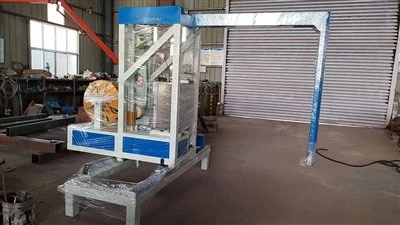
First, let’s ground this in what an ACB packaging line actually does. Aerated concrete blocks are lightweight, porous, and sensitive—way more delicate than regular concrete blocks. A bad packaging line doesn’t just wrap them up; it can crack edges, chip corners, or even cause internal stress that leads to blocks breaking on the job site. A good line, though, is calibrated to handle that porosity and weight (which is still substantial—each unit can weigh 20-30 kg) without sacrificing speed. That’s where the comparison between manufacturers starts, and it’s all in the details that most first-time buyers miss.
Let’s talk about core mechanical components. I’ve seen suppliers cut corners here constantly. For example, a line from a budget manufacturer might use standard steel for its conveyor rollers, but a high-quality line uses hardened, chrome-plated steel. Why does that matter? ACB dust is incredibly abrasive. Over six months, budget rollers will wear down, develop flat spots, and start jamming, leading to 2-3 hours of unplanned downtime every week. I worked with a plant in Poland last year that switched from a budget line to one we supply; their downtime dropped by 78% in the first quarter. That’s not a small number—for a plant producing 50,000 blocks a day, every hour of downtime translates to thousands of euros in lost product, plus overtime to catch up. Another mechanical difference: the stretch film tensioning system. Budget lines use a simple spring-based tensioner that’s either too loose (film slips, blocks shift) or too tight (stretches film to its breaking point, wastes material). A quality line uses a servo-driven tensioner, which adjusts in real time based on the size and weight of the block bundle. One customer in South Korea told me they cut their stretch film usage by 15% in the first year just from that one component—saving them $12,000 annually. That’s direct cost savings from choosing the right manufacturer.
Then there’s the automation and control system, which is where the biggest disparities show up, especially as plants scale. Older, lower-end lines use programmable logic controllers (PLCs) from generic brands that lack ACB-specific programming. I’ve seen these lines struggle to handle different bundle sizes—if a plant needs to switch from 10-block bundles to 12-block bundles, the line can’t adjust without a full programming reset, which takes 4 hours of a technician’s time. High-quality lines, by contrast, have pre-programmed settings for common ACB block sizes, so a switch takes 5 minutes, max. Even better, some top-tier manufacturers (like us) build in connectivity to plant management systems, so the packaging line can sync with the block production line, adjusting speed automatically if the production line slows down. I had a customer in Vietnam who was running two shifts; before, they needed a full-time operator just to adjust the packaging line’s settings. Now, one operator handles two lines, saving them over $30,000 a year in labor. That’s a huge ROI that buyers often overlook when comparing initial prices.
Another often-overlooked factor is post-installation support, which varies wildly between manufacturers. A budget supplier might sell you the line, drop it off, and never answer your calls again. I’ve heard horror stories from plants where a conveyor broke down on a Friday afternoon, and the supplier didn’t send a technician until Monday—meaning the plant lost 3 days of production. Quality suppliers, though, have local service teams on call 24/7, and stock critical spare parts at regional warehouses. For example, when a plant in Brazil had a sensor fail during a night shift, our local technician was there in 90 minutes, and we had a replacement sensor shipped overnight from our Miami warehouse. That kind of support isn’t just “nice to have”—it’s essential for plants that run 24/7. I also make it a point to train every operator on how to do basic troubleshooting, not just the technicians. A lot of budget suppliers don’t invest in operator training, so a small jam that could be fixed in 5 minutes becomes a 2-hour delay.
Now, let’s talk about long-term reliability vs. initial cost. I can’t stress this enough: the cheapest line isn’t the best value. A budget line might cost 20-30% less upfront, but its lifespan is 5-7 years, compared to 10-12 years for a quality line. Plus, the maintenance costs for a budget line are 3x higher annually—from replacing worn rollers to fixing frequent sensor issues. I’ve done a cost analysis for a customer in Turkey: over 10 years, the total cost of ownership (initial purchase + maintenance + downtime) for a budget line was €1.2 million, while a quality line was €850,000. That’s a massive difference, and it’s why savvy ACB plant owners now prioritize total cost of ownership over sticker price.
But wait—what about manufacturers that claim to be “high-end” but don’t actually understand ACB-specific needs? I’ve seen that too. Some packaging line makers build lines for general concrete blocks, then repackage them as ACB lines, without accounting for ACB’s fragility. For example, general block lines often use sharp corners on the holding fixtures to secure bundles, which can chip ACB blocks. A real ACB line uses soft, rubberized clamps that grip the bundle without damaging edges. That might sound like a tiny detail, but ACB blocks are sold on their smooth edges—chips mean you can’t sell them as “standard grade,” so you have to discount them or scrap them. That’s another hidden cost.
So, how do you compare manufacturers fairly? First, ask for a site visit to a plant that’s been using their line for at least 12 months. A lot of suppliers will show you a demo line, but that’s not the same as seeing a line running in real production. At that site, ask for metrics: downtime per month, film usage, labor needed, number of block damages. If a manufacturer hesitates to give you those numbers, that’s a red flag. Second, check their spare part availability. If they only make parts in their home country, you’re stuck waiting weeks for a replacement. Third, ask about customization. Every ACB plant has different bundle sizes, production speeds, and layout constraints. A good manufacturer will design a line around your specific plant, not force you to adapt to their line.
Let me also touch on recent innovations that separate top manufacturers from the rest. For example, some newer lines now have AI-powered quality checks that scan every bundle for damaged blocks before packaging. That might add a bit to the initial cost, but it reduces the number of damaged blocks reaching the construction site, which improves your plant’s reputation. Another innovation is energy efficiency—high-quality lines use variable frequency drives that adjust power based on load, cutting electricity usage by 20-25% compared to older lines. For a plant running 50,000 blocks a day, that’s thousands of euros a year in energy savings.
Over the years, I’ve learned that the best way to avoid the headaches of a bad packaging line is to work with a supplier that has deep roots in the ACB industry, not just general packaging. Some manufacturers specialize in a dozen different products, from food packaging to lumber, and they don’t have the expertise to handle ACB’s unique needs. Suppliers like us focus exclusively on ACB lines, so we know every nuance—from the weight of a 10-block bundle to the specific dust that accumulates on conveyors. That specialized expertise shows up in every component, every control setting, and every part of the support we provide.
At the end of the day, a packaging line is one of the biggest investments an ACB plant will make, after their production kilns. Choosing the right manufacturer isn’t just about getting a machine that wraps blocks—it’s about minimizing downtime, lowering labor and material costs, and protecting the quality of your product. If you’re in the market for an aerated concrete block packaging line, I’d encourage you to look beyond the initial price tag, ask the hard questions about reliability, support, and total cost of ownership, and don’t be afraid to ask for references from actual customers.
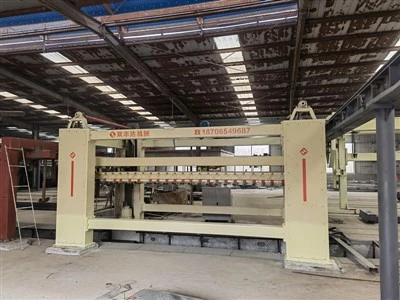
If you’re ready to discuss your plant’s specific needs and get a clear breakdown of how our lines compare to other manufacturers on the market, reach out to our team to schedule a consultation. We’ll walk you through real customer data, show you lines running in live production, and help you find a solution that fits your budget and long-term goals.
AAC Raw Material Handling System References:
- Aerated Concrete Block Manufacturing: Industry Trends and Equipment Specifications. European Concrete Block Association, 2023.
- Total Cost of Ownership Analysis for Industrial Packaging Lines. Industrial Equipment Maintenance Journal, vol. 18, no. 4, 2022, pp. 45-52.
- Handling Porous Construction Materials: Best Practices for Packaging. Construction Packaging & Logistics Report, vol. 11, no. 2, 2021, pp. 19-24.
- Automation and Labor Efficiency in ACB Production Facilities. Global Construction Equipment Review, 2023, pp. 78-81.
Qingzhou Shuangfengda Machinery Engineering Co., Ltd.
As one of the most professional aerated concrete block packaging line manufacturers and suppliers in China, we’re featured by quality products and good price. Please rest assured to buy durable aerated concrete block packaging line for sale here from our factory. Customized orders are welcome.
Address: Gaojiazhuang Village, Gaoliu Town, Qingzhou City, Shandong Province
E-mail: lenhond@163.com
WebSite: https://www.sfdmachinery.com/
