Alright, let’s jump in. If you’ve ever hung around a CNG mother station, you’ve probably glanced at the giant pressure gauges lining the compressor room walls and thought, “Wait, what numbers are we even working with here?” It’s not just random dial readings—this pressure range is the make-or-break detail for every single move we make as a CNG mother station supplier, and it’s way more straightforward than it sounds once you break it down. CNG Mother Station
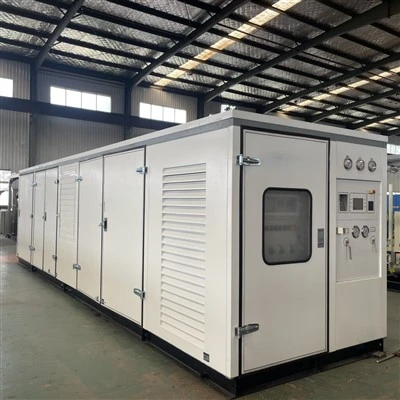
First, let’s get one thing straight: CNG stands for Compressed Natural Gas, right? It’s the same stuff that comes out of your home’s gas line, just squeezed down to a tiny fraction of its original volume so we can stuff way more into cylinders for transport and use. The mother station is the big hub—this is where raw natural gas comes in from the pipeline, gets cleaned, dried, compressed, and then loaded into those big tube trailers that haul it to smaller daughter stations, filling stations, industrial sites, all that. So the pressure range here isn’t just a spec—it’s the backbone of how we operate safely, efficiently, and affordably.
Now, let’s talk numbers. A lot of folks mix up what happens at the wellhead, the pipeline, the mother station, and the tube trailers. The pipeline that feeds the mother station is usually operating at somewhere between 200 psi and 1,500 psi, depending on where you are in the grid. But we don’t use that pressure directly for CNG tube trailers, because their cylinders are built to hold a much higher, specific max pressure (usually around 3,600 psi for standard light-duty trailers, but heavy-duty ones can go up to 4,500 psi, and some newer ultra-high-pressure ones hit 5,000 psi). Our whole job at the mother station is to compress that incoming pipeline gas up to that trailer-safe max, then hold it at the right level before loading, right?
Wait, so the operating pressure range inside the mother station’s main storage and compression loops? Let’s keep it real: we don’t run the whole station at one static pressure. There’s a low-side range and a high-side range, and it’s split by the compressors. The suction side of the main gas compressors—that’s where the raw gas comes in from the pipeline, before it gets squeezed—operates between 20 psi and 150 psi. That’s super low, relative to what comes next. Then the discharge side, where the gas gets pushed out of the compressors, is where the real action happens: that’s between 3,000 psi and 3,600 psi for most standard mother stations. But hold on, if we’re running heavy-duty tube trailers (the ones that serve semi-truck filling stations, for example), we’ll bump that up to 4,200 psi to make sure we fill those thicker-walled cylinders all the way without wasting capacity. And for any new stations that install ultra-high-pressure trailers, we can tune our discharge pressure to 4,800 psi too—we design our stations to be adjustable, not locked into one number.
Now, what’s the lower end we can go to? We never want to drop below 2,800 psi on the high side, honestly. Why? Because if we load a tube trailer at 2,800 psi, by the time that trailer drives a hundred miles to a daughter station, the pressure drops a little from heat loss and line friction, and we’d end up short-changing the customer—they’d get way less gas than they paid for. That’s a quick way to lose a client, so we keep our mother station’s high-side storage reserve at a minimum of 2,800 psi when we’re not actively compressing. If demand is super low at the time, we might let it hover between 2,800 psi and 3,000 psi, but that’s not ideal—we’re wasting compressor efficiency when we run at the bottom end.
Let’s talk about safety, because that’s non-negotiable here. The pressure range isn’t just picked out of a hat—all of it is set to strict local and national codes, right? We work with facilities in North America, and we follow NFPA 52 (that’s the code for vehicular gas fuel systems) and OSHA standards, plus pipeline safety rules from PHMSA. That means every gauge, every compressor, every storage vessel in the mother station is calibrated to not let pressure spike above 3,750 psi—even if someone accidentally leaves a valve open. We add safety relief valves that pop at 4,000 psi max, just in case. That extra buffer is there to prevent any kind of rupture, which is a total nightmare for everyone on site.
I’ve been in this game as a CNG mother station supplier for over 10 years now, and I’ve seen a lot of new operators get tripped up by this pressure stuff. Last year, we worked with a small mom-and-pop energy company in Ohio that tried to build their first mother station on a budget, so they bought cheap compressors that could only go up to 2,500 psi. They had no idea that standard tube trailers need at least 3,000 psi to load properly, so they were selling way less gas per trailer than they quoted. They had to rip out half their setup and upgrade the compressors within 6 months—cost them way more than if they’d gotten the specs right from the start. That’s why we make it a point to walk every new customer through exactly what their pressure range needs to be, based on what kind of clients they’re serving.
Another thing: the pressure range also ties directly to how efficient the whole operation is. The higher we can compress the gas, the less trips tube trailers have to make. If I can load a trailer at 3,600 psi vs 3,000 psi, that’s 20% more gas in the same trailer—so they make 1 less trip per week, saving fuel costs, reducing emissions, all that. But we can’t crank it higher than the cylinder max, obviously. So it’s a balance between capacity, safety, and the kind of trailers the customer already owns or plans to buy.
Wait, let’s not forget about the mother station’s intermediate storage, too. A lot of people think the only pressure is in the compressor, but we have big vertical storage tanks at the mother station that hold compressed gas between runs. Those tanks operate at the same high-side range, usually 2,800 psi to 3,600 psi, so when a tube trailer pulls up, we don’t have to fire up the big compressors every single time. That saves energy, which keeps operating costs low for the station.
Let me answer the most common question I get from new operators: “Can I run my mother station at a lower pressure to save money on compressors?” Technically, yes, but it’s a terrible idea. Like that Ohio company, they end up losing revenue. Also, if you go below 2,500 psi, you have to run the compressors way harder to fill the same trailers, which means more wear and tear, more maintenance costs, and higher utility bills. It’s a false economy. The sweet spot for most standard mother stations is 3,000 psi to 3,600 psi for loading, with the low-side compressor suction at 50 psi to 100 psi. For high-demand areas like California or Texas, where CNG is used for long-haul trucks, we bump that upper limit to 4,200 psi, because those trailers have thicker cylinders that can handle more pressure.
And what about peak demand days? Like when everyone’s filling up for a holiday weekend, or an industrial plant ramps up production. We adjust the pressure range then too—we’ll run the compressors a little longer to get up to 3,600 psi, so we can load more trailers faster, without making the drivers wait around. That’s the agility we build into every mother station we design—our control systems let us tweak the pressure on the fly, so we can keep up with demand without breaking safety rules.
As a supplier, we don’t just sell equipment and walk away. We handle the pressure calibration, the code checks, the operator training, so our customers never have to guess what numbers they should be running at. We’ve seen too many operators get burned by generic specs online—they see “CNG pressure is 3,000 psi” and think that’s the only number, but it’s way more nuanced. It depends on your pipeline inlet pressure, your tube trailer fleet, your local codes, and how much demand you expect.
At the end of the day, the pressure range of a CNG mother station isn’t just a technical detail—it’s the core of the whole operation. Get it right, and you’ve got a safe, profitable station that keeps clients happy. Get it wrong, and you’re looking at downtime, lost revenue, and safety risks. That’s why we take the time to tailor every mother station we build to each customer’s specific needs, not just a one-size-fits-all setup.

If you’re in the market for a new CNG mother station, or you’re looking to upgrade your existing one to handle higher pressure or more demand, we’re here to walk you through every step. We’ll go over your current pipeline specs, your trailer fleet, and your growth plans to make sure you get the perfect pressure range for your operation, no guesswork required. Just reach out to us to start a conversation—we’re happy to answer all your questions, no sales pitch pressure, just real advice from people who’ve been in this industry for years.
References
LNG Stations NFPA 52: Standard for Vehicular Natural Gas Fuel Systems
PHMSA (Pipeline and Hazardous Materials Safety Administration): Natural Gas Pipeline Safety Standards
Compressed Natural Gas Vehicle Association (CNGVA): Mother Station Operational Guidelines
Qingdao Lenado Intelligent Equipment Co., Ltd.
Qingdao Lenado Intelligent Equipment Co., Ltd. is one of the most experienced CNG mother station manufacturers and suppliers in China. We have world-leading production equipment and strong manufacturing capabilities. Please rest assured to wholesale bulk customized CNG mother station from our factory.
Address:
E-mail: genkegasstation@163.com
WebSite: https://www.cnggasstation.com/
