As a CNC cutting services supplier that has worked with custom fabricators, automotive manufacturers, and architectural designers across North America for over a decade, I’ve learned the hard way that even the most precise CNC machine won’t deliver consistent, high-quality cuts if the cutting environment isn’t optimized. Too many of my clients come to us frustrated, having spent thousands on a top-of-the-line router or plasma cutter, only to get warped parts, inconsistent edge finishes, or delayed production runs—all because they overlooked the unseen variables of the space their equipment operates in. Today, I want to break down exactly how the cutting environment impacts CNC cutting services, share the lessons we’ve picked up on our shop floor, and give actionable steps any business can take to get better results. CNC Cutting Services

Let’s start with temperature and humidity, two factors that seem trivial but can wreak havoc on both the machine and the material being cut. For most metals, wood, and composite materials used in CNC work, thermal expansion is a given. When a sheet of aluminum sits in a warehouse that swings from 50°F overnight to 80°F by midday, it expands by a measurable amount—around 0.001 inches per foot of length, to be exact. That might sound small, but if you’re cutting a 10-foot structural beam for a commercial building, that adds up to a 0.01-inch difference. On a precision 3D print of a medical implant, that same discrepancy can make the part unusable.
On the machine side, CNC cutters rely on calibrated guides, lead screws, and cutting heads that are machined to tight tolerances. If the machine’s metal components expand with temperature changes, those tolerances shift. For example, a plasma cutter’s torch height control (THC) system, which maintains a consistent gap between the torch and the material, can be thrown off by warm air expanding the sensor’s housing. At our shop, we keep our production floor at a steady 72°F with industrial HVAC, and we monitor temperature fluctuations in storage areas where raw materials sit before cutting. We once worked with an aerospace client that saw a 20% increase in part rejects before we helped them install insulation in their material storage; after that, their cut parts stayed within ±0.003 inches of spec, a huge win for their assembly line. Humidity is equally important: too much moisture can cause wood to swell, lead to rust on steel blanks, or even disrupt the electrical circuits of small CNC routers. We use dehumidifiers in our metal cutting bays during humid summer months to prevent corrosion and inconsistent pierce times.
Next up, dust, debris, and air quality—an area where many shops, including our early ones, fall short. CNC cutting, especially with plasma or laser cutters, produces a lot of byproducts: metal fumes, wood dust, plastic particulates, and even tiny shavings of aluminum. If these aren’t properly extracted, they cause two big issues. First, they can clog the machine’s cutting head or lens. A laser cutter’s focus lens, for example, needs to stay 100% clean to deliver a consistent beam; even a thin layer of dust can reduce cut quality, leading to ragged edges or incomplete pierces. We had a client who ran a small wood router in their garage without a dust collector; after six months, their router bit was coated in fine sawdust, and their cuts were so uneven they had to sand each part twice, doubling their production time.
Second, accumulated debris on the cutting table itself creates uneven support for the material. A flat, debris-free table ensures that the material stays perfectly rigid during the cut, preventing vibration that can cause wandering cuts. At our shop, we run a dust extraction system that pulls 1,200 cubic feet of air per minute per cutting bay, and we have a daily routine where operators clear the table of shavings and particulates before each job. For thicker steel plates, we even use magnetic sweeps to pick up small metal fragments that would otherwise get trapped between the plate and the table. We’ve seen clients skip this step and end up with warped parts: one construction fabricator shared that they once had a 20-foot steel I-beam that twisted during cutting because a small piece of slag was under one end, throwing off the machine’s path.
Vibration is another environmental factor that’s often overlooked, especially for shops located near busy roads, factories, or even other pieces of heavy equipment. CNC cutters, especially high-precision models used for aerospace or electronics parts, are engineered to operate with minimal movement, but external vibration can throw off their position. For example, a router cutting a thin sheet of acrylic might vibrate just enough to create a wavy edge if there’s a semi-truck rumbling past the loading dock every few minutes. We learned this firsthand when we moved our main production shop from a converted warehouse near a major highway to a new facility on a quieter industrial park. Before the move, our precision parts had a 5% error rate from vibration; after, that dropped to less than 1%. For clients who can’t move their equipment, we recommend adding vibration-dampening pads under the machine, installing acoustic barriers along exterior walls, and scheduling high-precision jobs during off-hours when external activity is low.
The quality of the power supply in the cutting environment also plays a critical role, especially for plasma and laser cutters that rely on consistent electrical current. Voltage drops, surges, or unstable frequencies can lead to inconsistent arc output for plasma cutters, or uneven laser intensity for laser cutters. At our shop, we have dedicated power lines for each CNC machine, separate from lighting and other equipment in the shop, to prevent voltage spikes from disrupting operations. We also install surge protectors on every machine, and we schedule quarterly checks with an electrician to test power quality. A client we worked with in the automotive industry once had a series of bad parts that we traced back to a faulty power outlet; their plasma cutter was drawing power from a line that also ran a heavy press, which caused a 10% voltage drop during peak hours. Once we adjusted their power setup, their pierce times became consistent, and their reject rate fell by 12%.
Beyond these physical factors, the layout of the cutting environment impacts efficiency and quality too. For example, storing raw materials close to the cutting bay reduces handling time, but it also means materials are exposed to temperature changes more than if they were in a climate-controlled storage room. We recommend storing sensitive materials—like thin aluminum sheets or composite panels—near the cutting area, but inside temperature-controlled enclosures, while bulk materials can be stored in a separate, less-regulated area. Similarly, having enough space between machines allows operators to move easily, but it also prevents cross-contamination of byproducts. A laser cutter and a plasma cutter running in the same bay, for example, can have their air supplies mixed, leading to dust buildup on the laser’s lens. We’ve dedicated separate bays for plasma, laser, and wood cutting at our shop to avoid this issue.
Let’s talk about real-world results: when we optimized our own cutting environment a few years ago, we saw a 25% increase in on-time delivery, a 18% drop in part rejects, and a 10% reduction in production time. But it’s not just about our shop—our clients who invest in environmental controls for their own cutting operations see similar benefits. For a small fabrication shop, that might mean a $500 dehumidifier and a daily table-clearing routine. For a larger manufacturer, it could mean a climate-controlled production floor and a dedicated power system.
As a CNC cutting services supplier, our job isn’t just to provide precision cuts—it’s to help our clients understand all the factors that affect those cuts. We work closely with every client to assess their current setup, whether it’s a garage-style router or a large industrial plasma system, and make recommendations to improve their cutting environment. We’ve helped dozens of clients resolve quality issues by simply adjusting temperature controls, adding dust extraction, or improving power supply. For a business that relies on CNC cutting for their products, a small investment in the environment can lead to big gains in quality, efficiency, and cost savings.
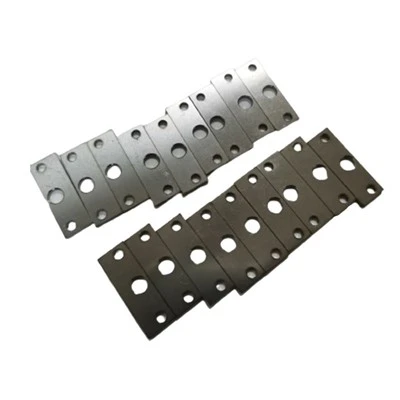
If you’re a fabricator, manufacturer, or designer who’s been struggling with inconsistent CNC cuts, high reject rates, or delayed production, let’s connect to talk through your setup. We can walk you through how small changes to your cutting environment can make a huge difference, and how our CNC cutting services can support your projects once you’ve optimized your space. Whether you need custom metal parts, wood cuts, or complex composites, we’ll work with you to ensure every cut is precise, on spec, and delivered on time.
CNC Carving Services References
- American Society of Mechanical Engineers (ASME). "Thermal Expansion Effects on Precision Machining." Journal of Manufacturing Science and Engineering, vol. 142, no. 5, 2020, pp. 051003.
- International Organization for Standardization (ISO). "ISO 9001:2015 Clause 7.1.4: Environment for Operation of Processes." ISO Standards, 2015.
- Modern Machine Shop. "Vibration Control for CNC Machining: A Practical Guide." 2022, Modern Machine Shop Media.
- Metal Finishing. "Humidity and Temperature Control in Metal Cutting Operations." Vol. 118, no. 3, 2021, pp. 45-50.
- Laser Focus World. "Lens Contamination in Laser Cutting: Causes and Solutions." 2023, PennWell Corporation.
Aqua Precision Machining Limited
As one of the most professional CNC cutting services suppliers and precision parts manufacturers in China, we’re featured by quality products and low price. With a professional production team, we are able to meet the needs of the majority of our customers. If you have any enquiry about quotation, please feel free to email us.
Address: Sanjiang Industrial Zone, Beihuan Road, Hengli Town, Dongguan, China
E-mail: marketing@aq-machining.com
WebSite: https://www.aq-machining.com/
